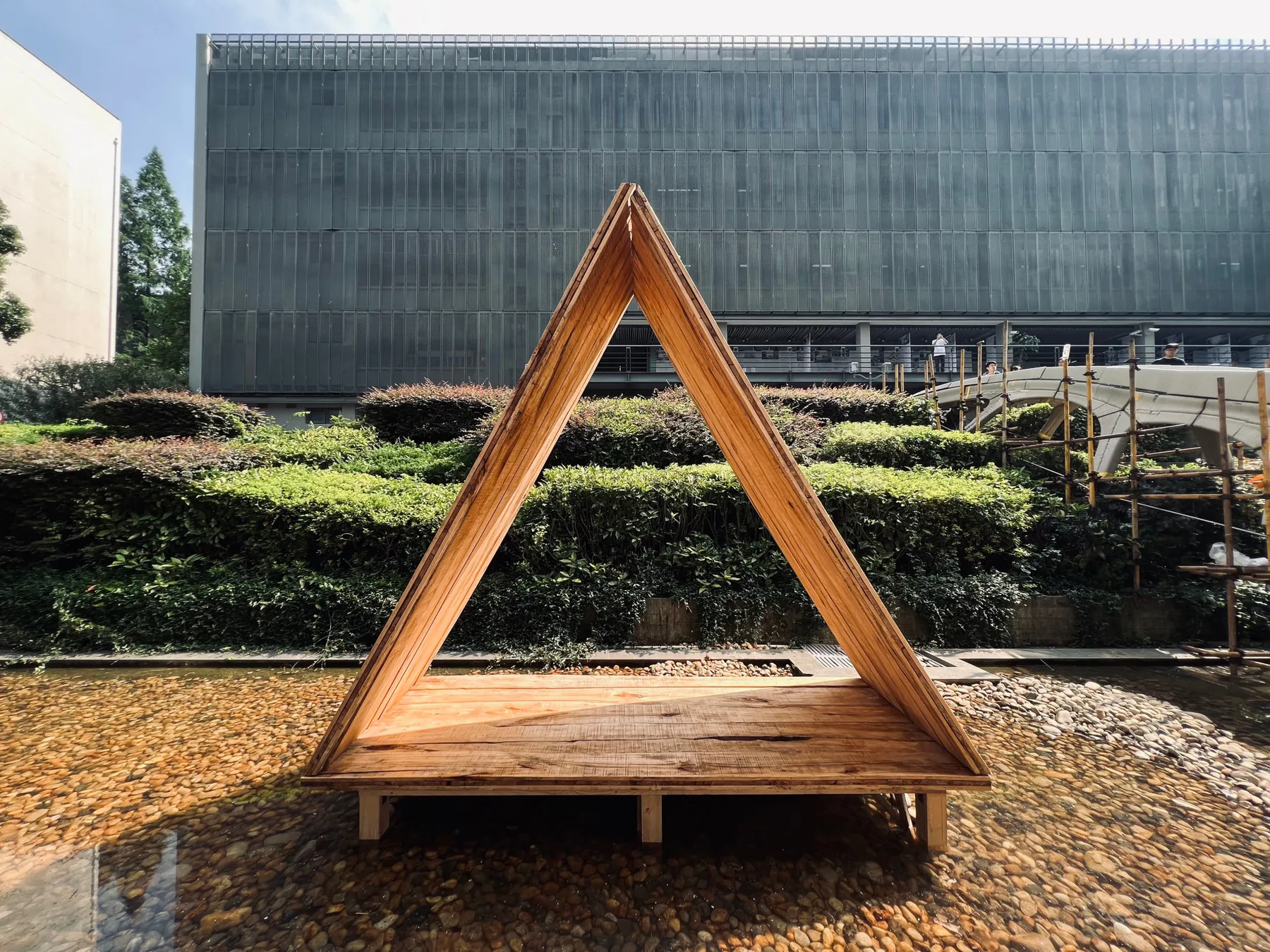
Smart CLT
Smart CLT (also known as AI Timber) is a vision-to-fabrication pipeline that upcycles irregular, salvaged timber boards into structural cross-laminated timber (CLT) panels. Instead of forcing natural material into standardized dimensions — and discarding the offcuts — the pipeline reads each board as it is, computes the least-wasteful way to combine them, and hands the result directly to a robot for fabrication.
Imaging: Reading Every Board
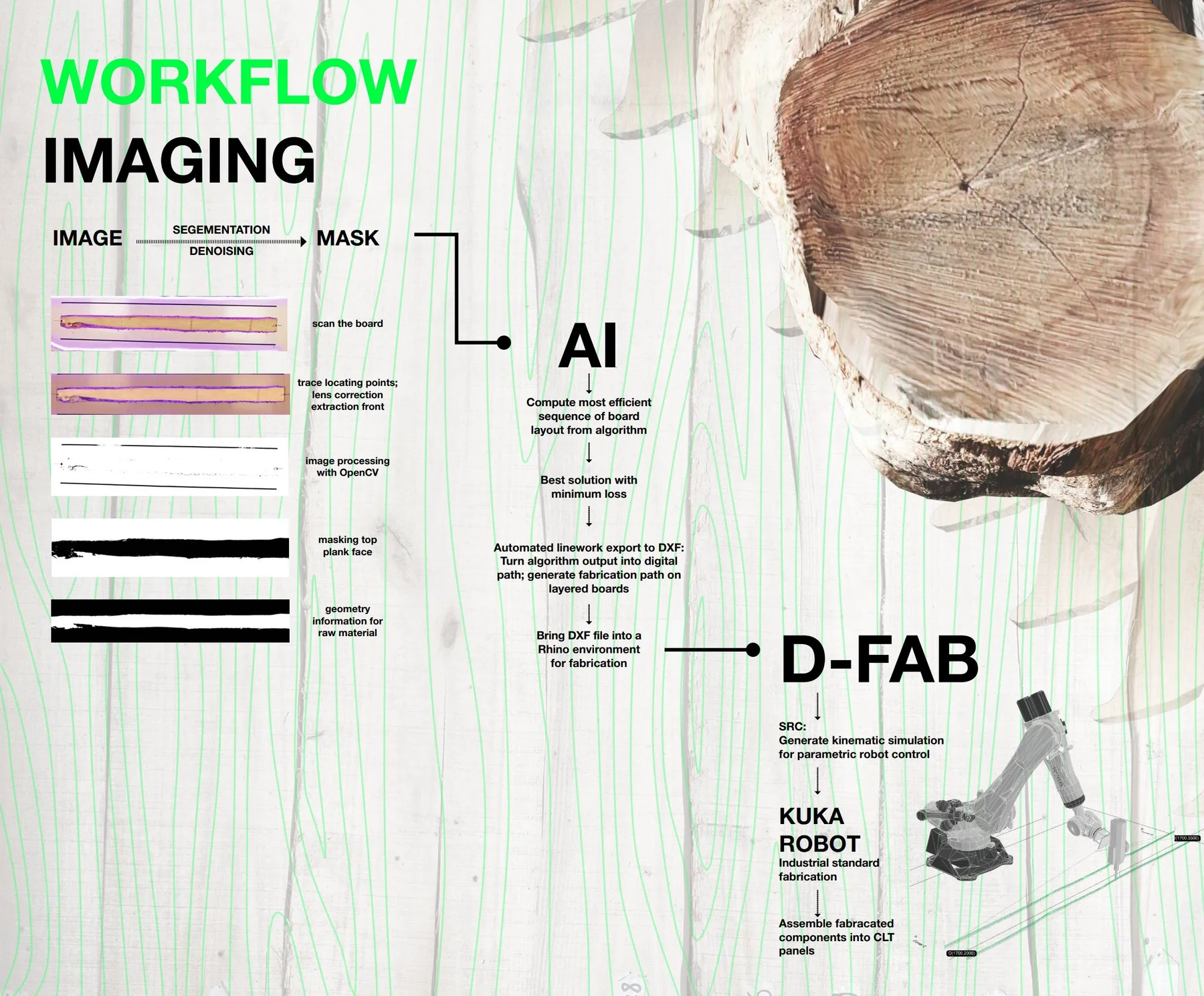
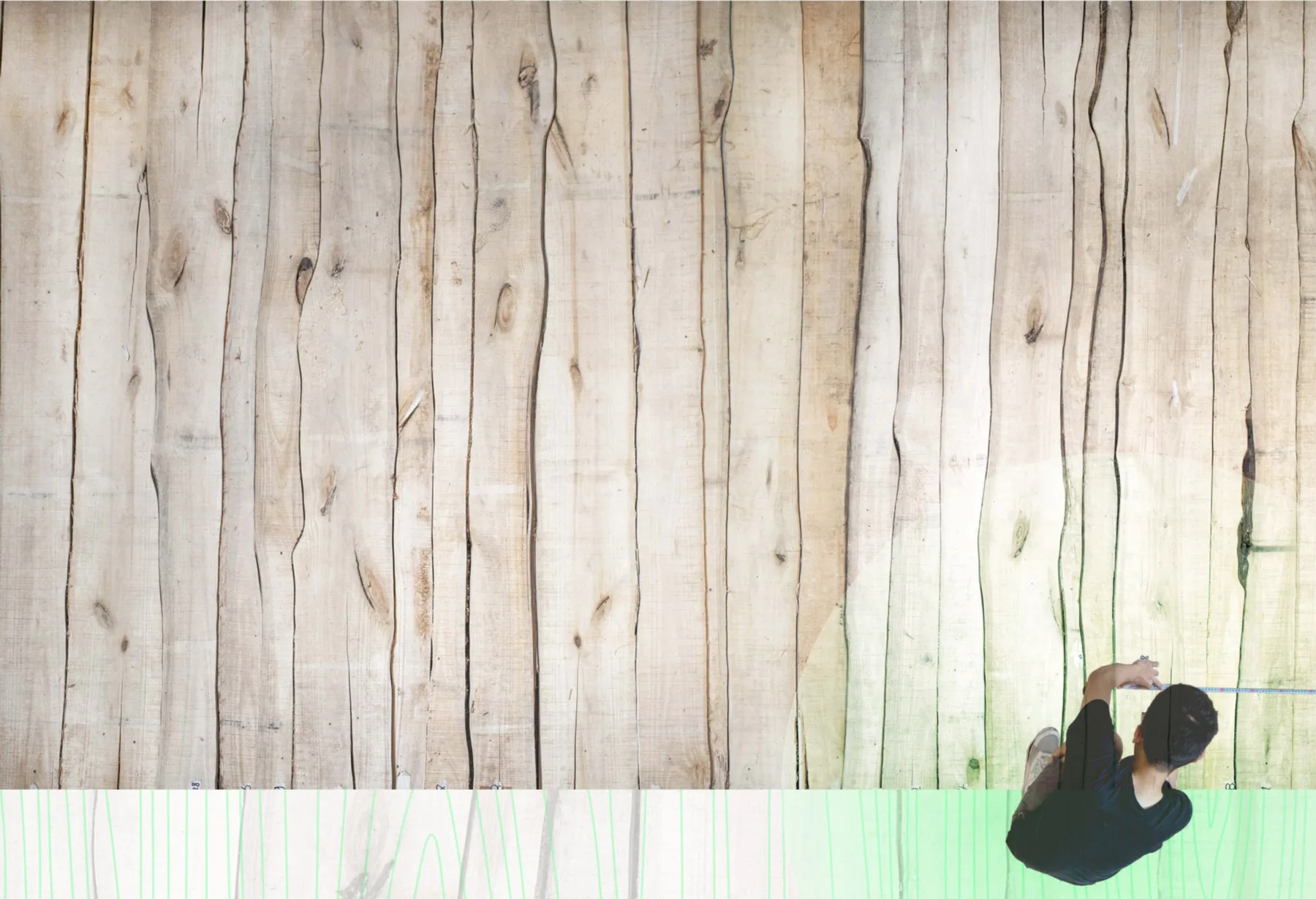
Each board is scanned and processed with OpenCV: lens correction, segmentation, and denoising extract a clean mask of the true board geometry — including its live edges, knots, and irregular contours. The masks become precise geometric records of the raw material inventory.
Optimization: Minimum-Loss Layout
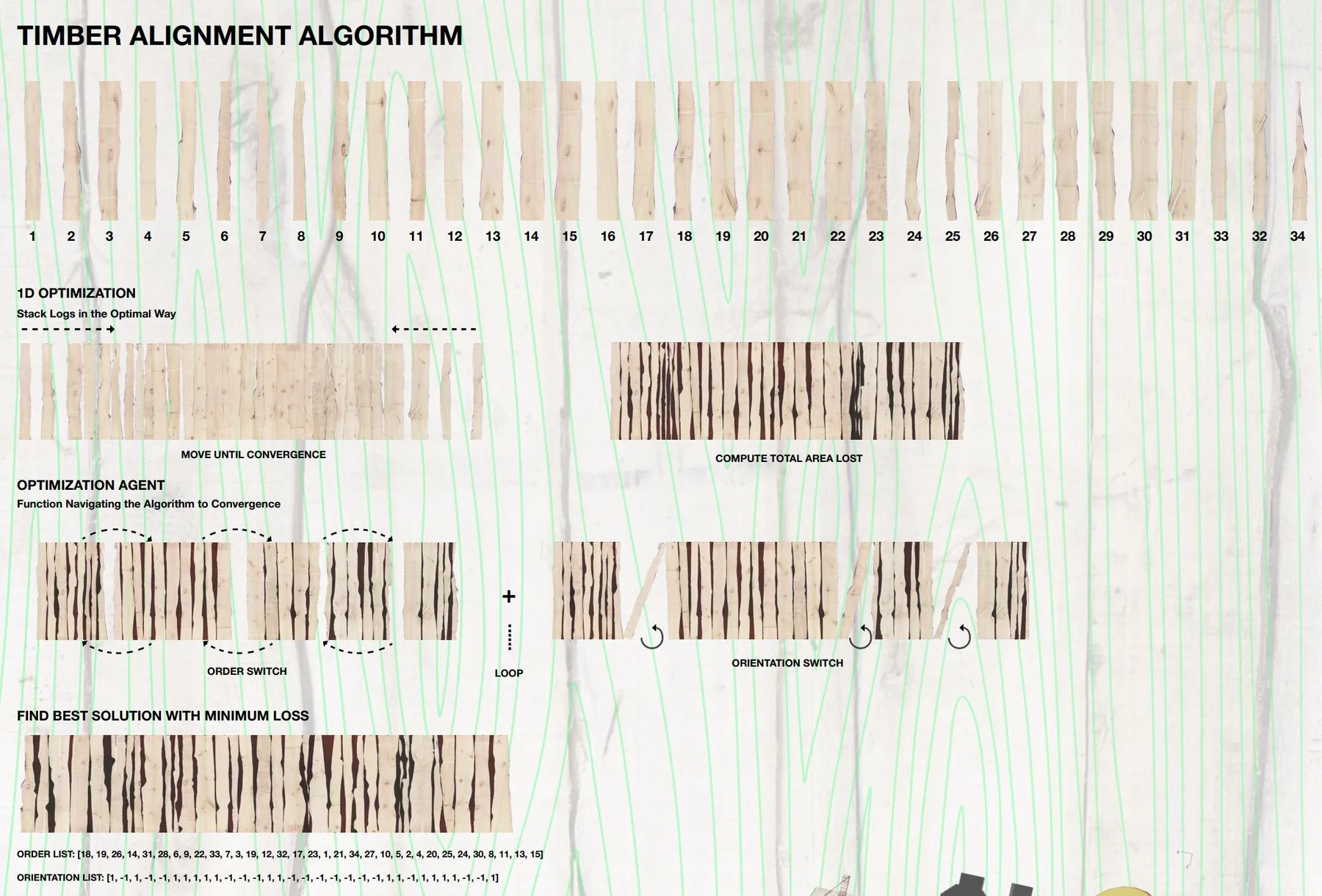
An optimization agent searches the space of board sequences and orientations. Starting from a 1D stacking of all scanned boards, it iteratively applies order switches and orientation flips, recomputing the total area lost at each step, and loops until convergence on the minimum-loss layout. The output — an order list and an orientation list — is exported as DXF linework that defines the fabrication paths for each layered board.
Fabrication: Robot in the Loop
The DXF paths are brought into Rhino, where a kinematic simulation (SRC) generates parametric robot control for a KUKA arm. The robot cuts and places each board along its optimized contour, and the fabricated components are laminated into CLT panels whose seams follow the natural edges of the wood.
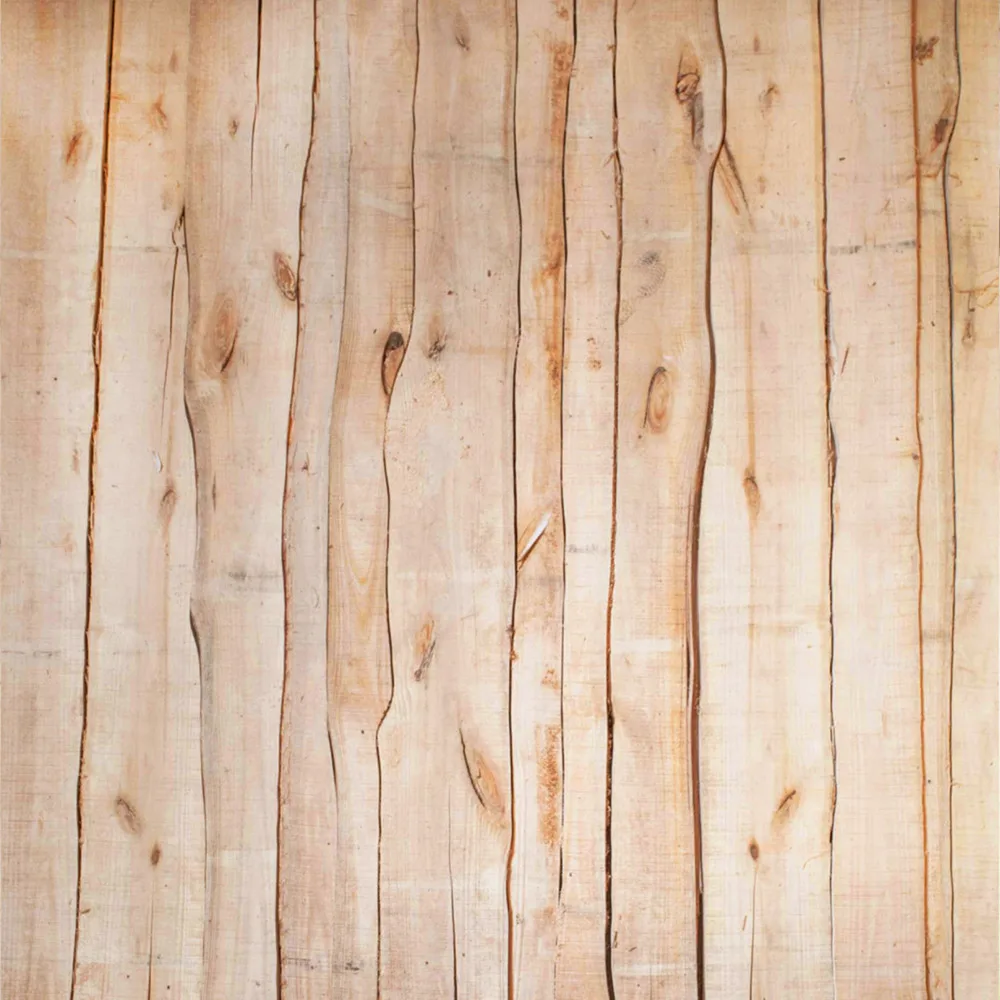
The Built Result
The panels culminate in a triangular timber pavilion — a full-scale demonstration that reclaimed, irregular timber can serve as structural material when computation absorbs the irregularity instead of the landfill.