INNOSTIM — EaseFlow
INNOSTIM's EaseFlow is a non-invasive, Bluetooth-enabled electrical-stimulation therapy device built for at-home use under a clinician-guided program. The product is more than the patch: it is a connected ecosystem where patients run and track their treatment from their phone, while clinicians and operators manage devices, content, and outcomes from a web portal — all backed by a single source of truth.
As founding full-stack product engineer, I designed and built the three software surfaces and the API that ties them together: a patient-facing WeChat Mini Program, a backend service, and a web management portal.
System Architecture
A connected ecosystem — the patient app, the management portal, and the BLE therapy device — kept in sync through one authenticated API and a single source of truth.
- Patient app: the daily touchpoint — pairs with the EaseFlow patch over Bluetooth and guides each treatment session, with a health diary and a knowledge base built in.
- Management portal: clinicians and operators monitor the device fleet, manage content, and review treatment outcomes.
- Unified API & data: one authenticated API over a shared store keeps every surface consistent; an offline-first design lets treatment continue and sync once the connection returns.
Key Features
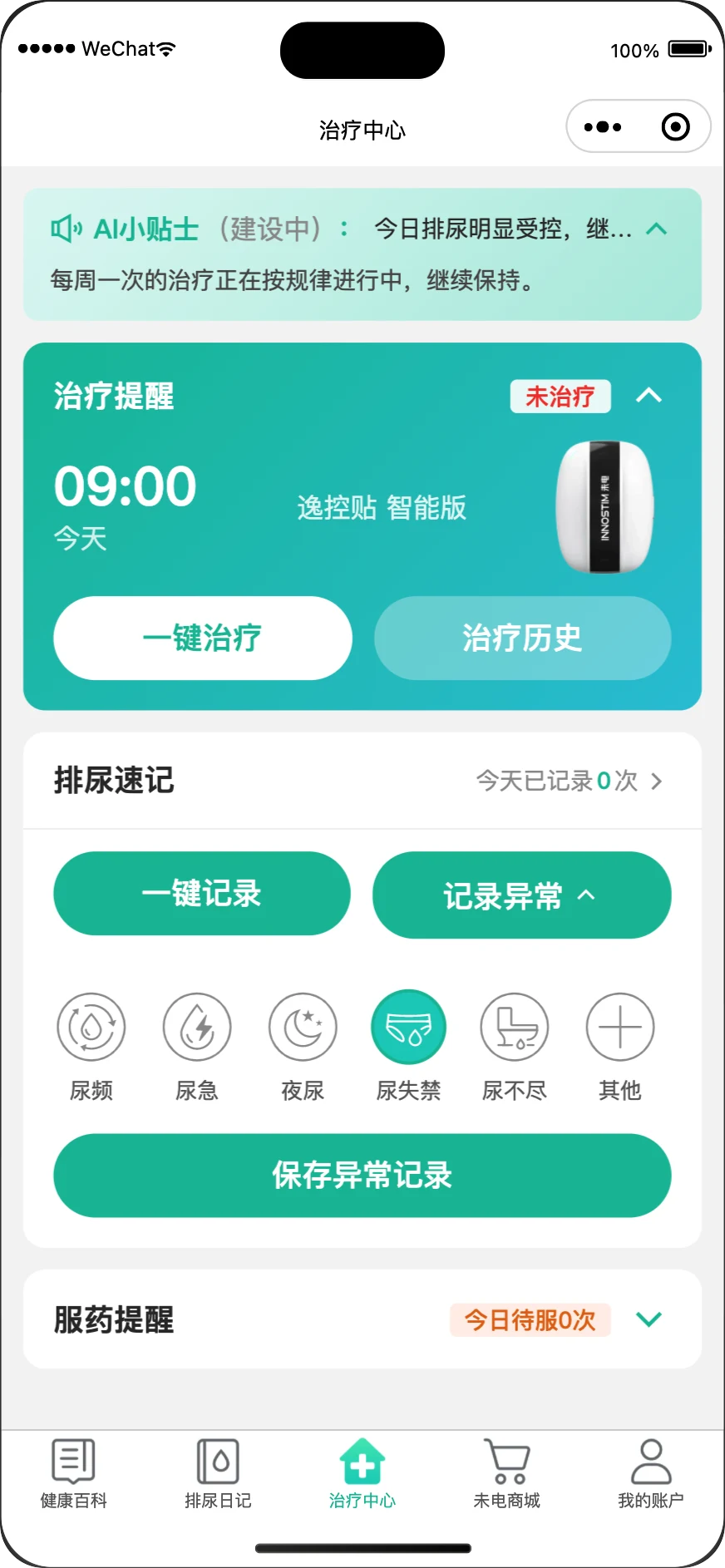
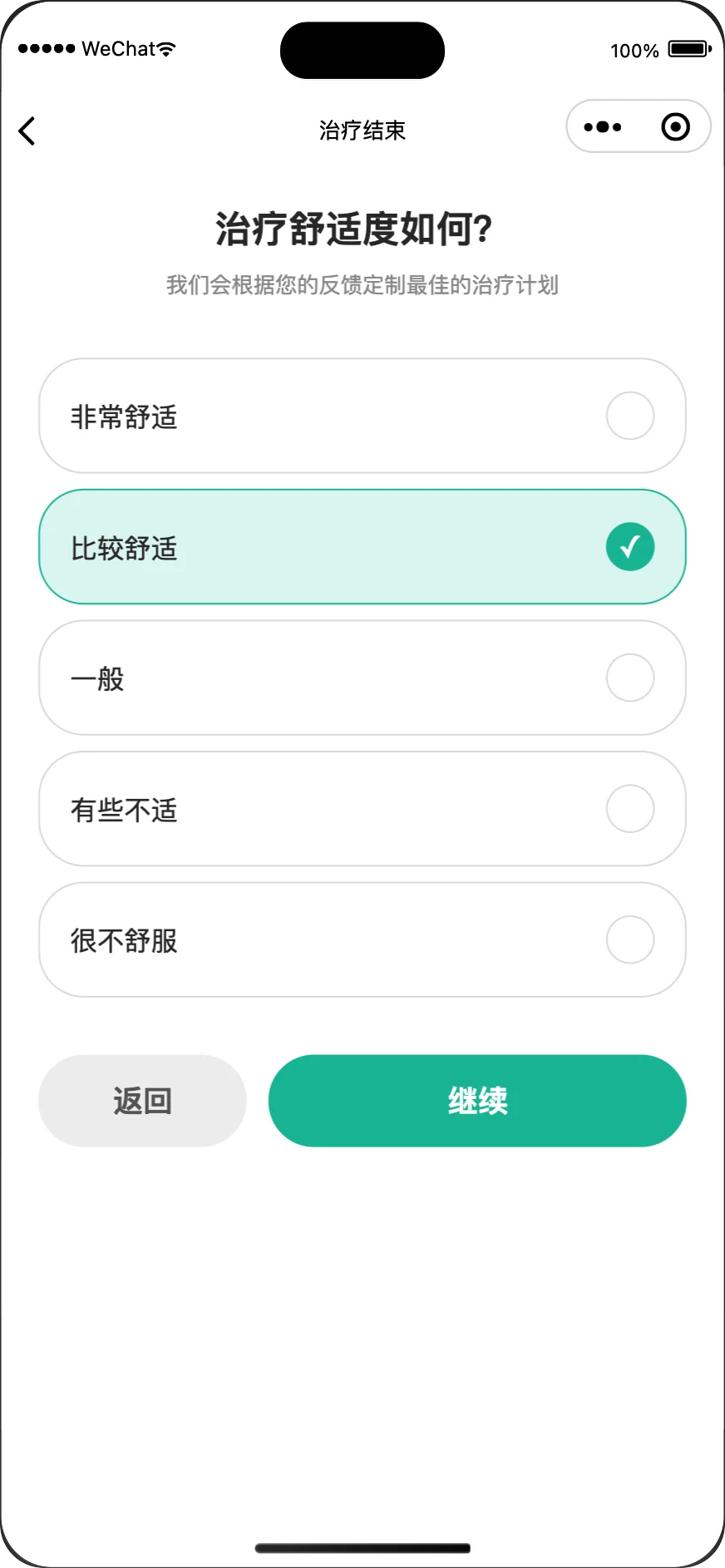
The patient experience centers on safe, guided treatment and effortless health tracking, while the portal gives operators control over the fleet and content.
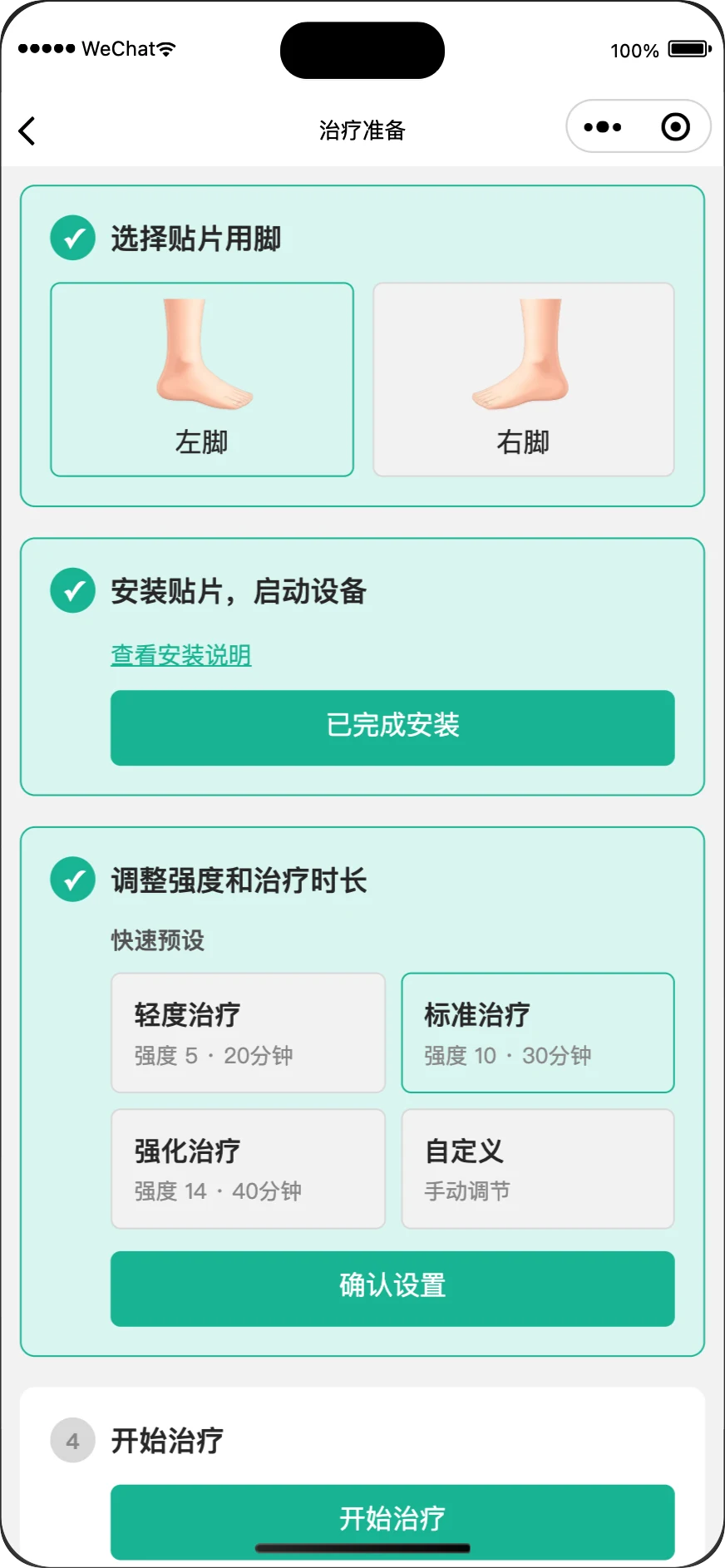
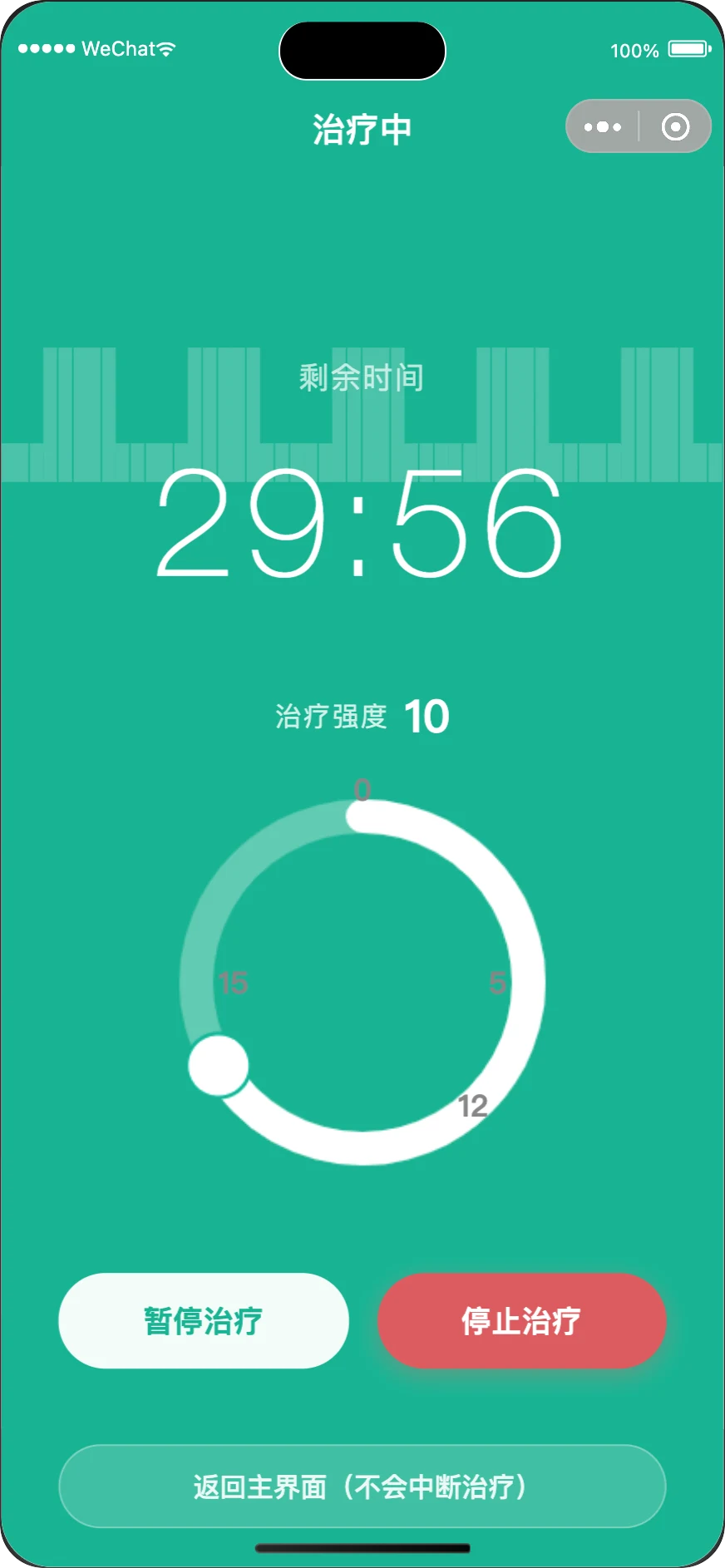
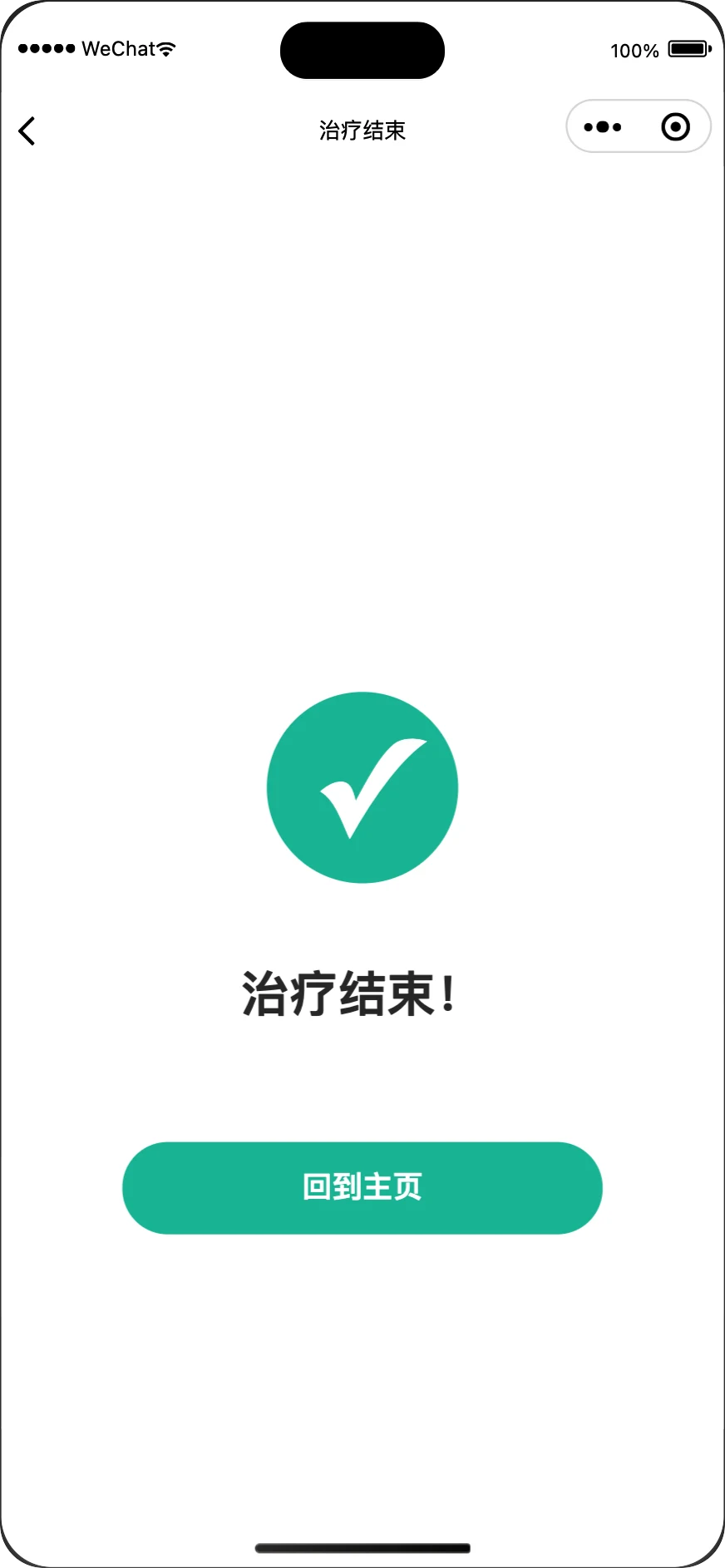
- Guided Treatment Sessions: Step-by-step patch placement and intensity control, with safety-bounded limits, an emergency stop, and automatic pause if the connection drops.
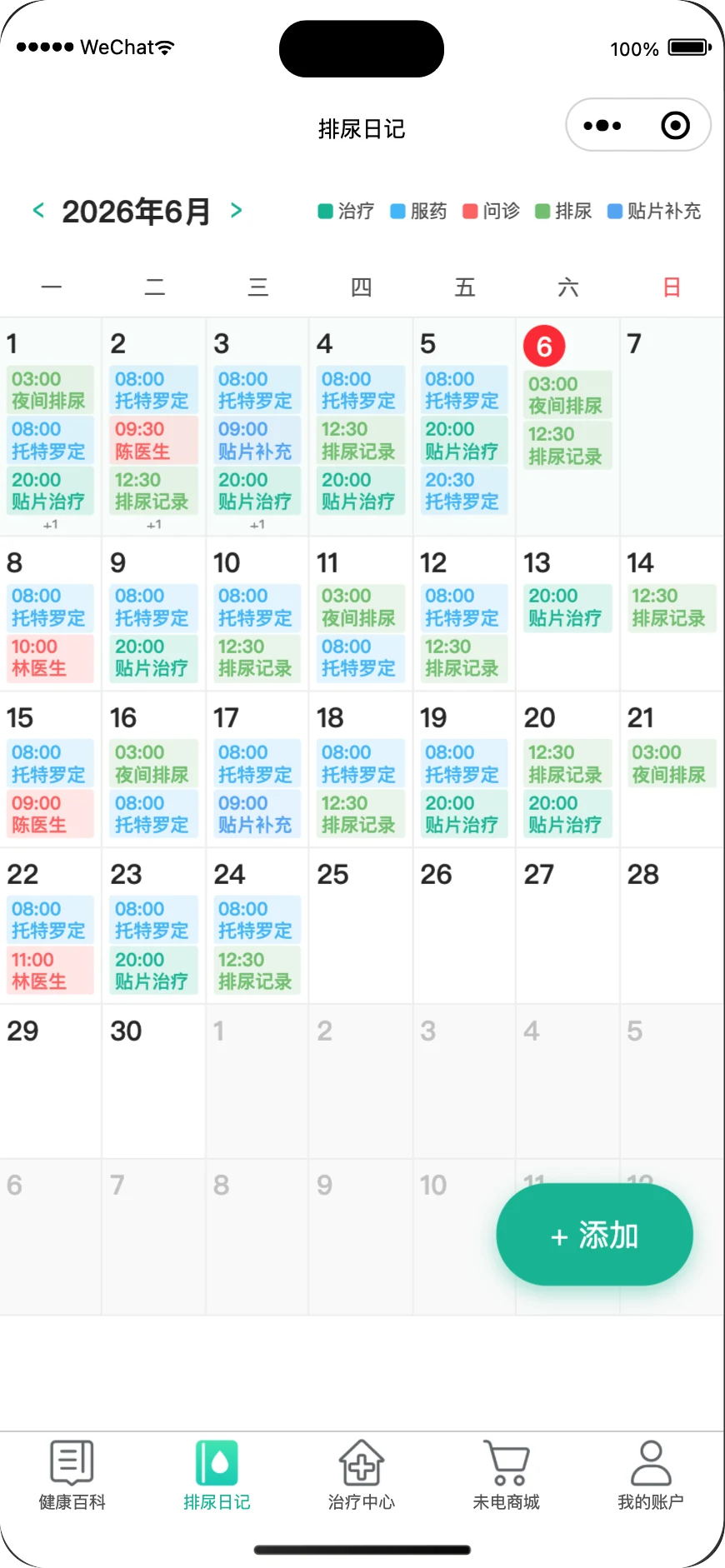
- Health Diary & Calendar: Calendar-based logging with month, week, and day views plus a trends view — patients see treatment and symptoms over time at a glance.
- Family Group: Relatives can join a patient's group to follow the treatment plan, reminders, and progress — keeping caregivers in the loop and supporting day-to-day adherence.
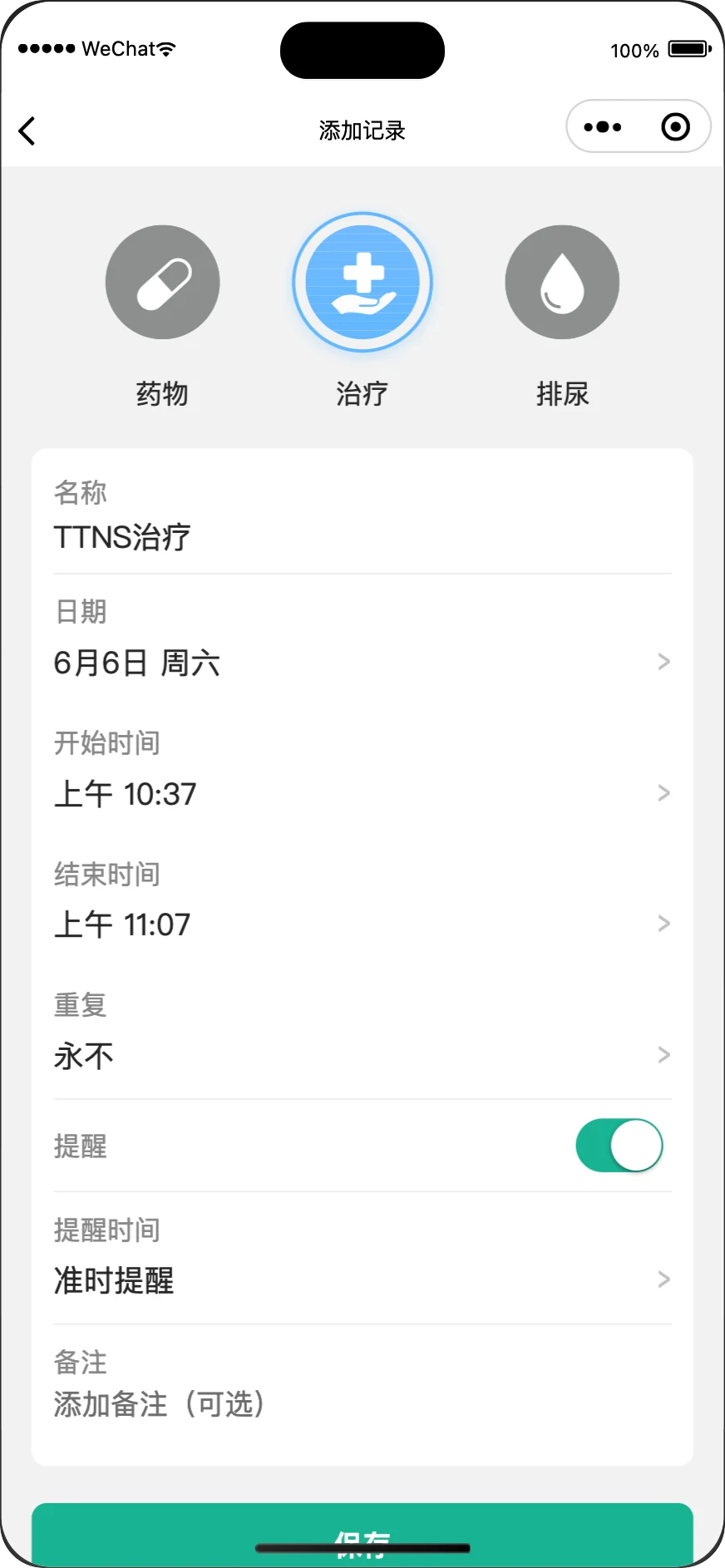
- Smart Reminders: Treatment and medication notifications surfaced at the right time, including through WeChat subscription messages.
- Bluetooth Device Management: Discovery, pairing, status monitoring, and prescription-based authorization with the EaseFlow patch.
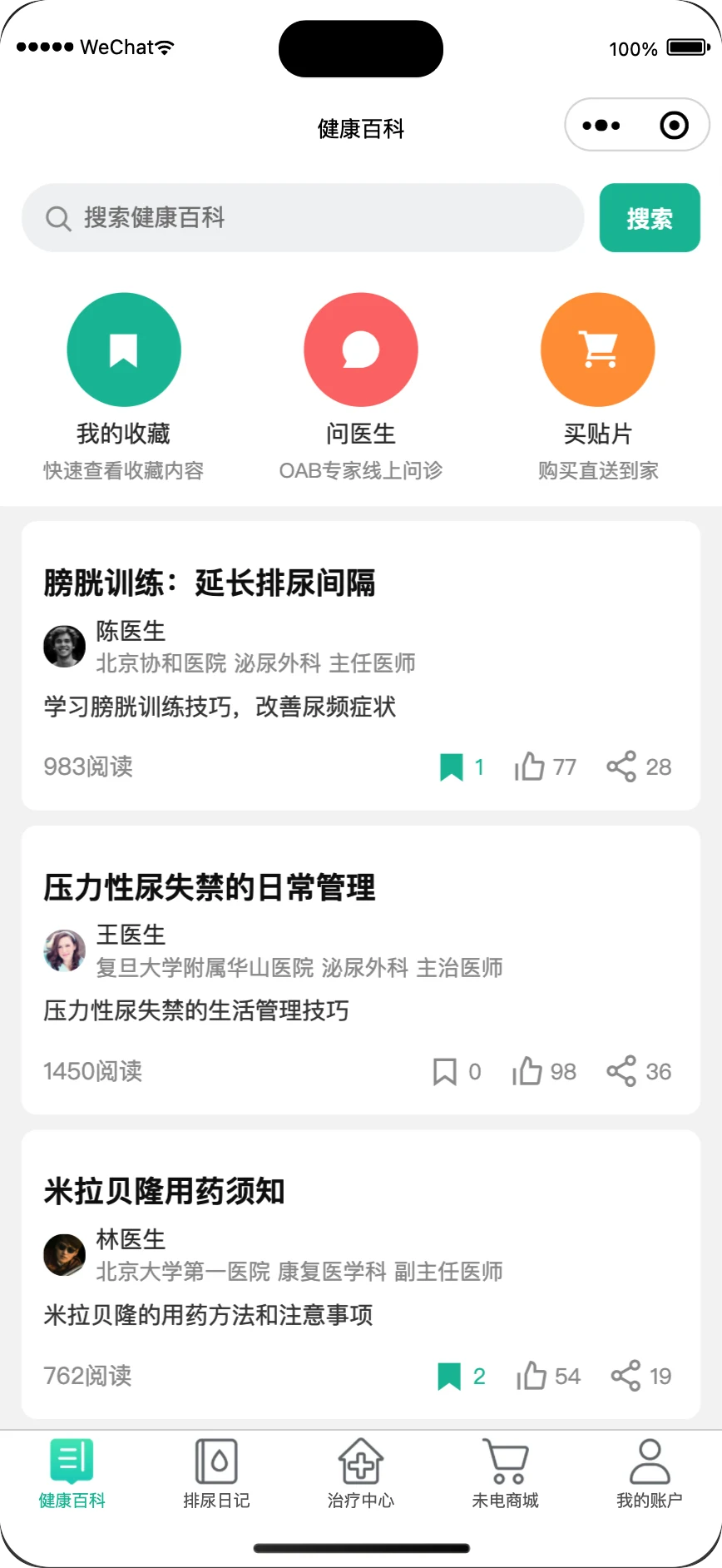
- Knowledge Base: An in-app library of educational articles with favorites and sharing.
- In-App Store: Order patches and accessories — from product detail through cart, checkout, and order history.
Engineering Notes
The backend exposes a clean, documented REST surface (OpenAPI/Swagger) with module boundaries per domain — auth, users, treatment sessions, diary events, reminders, devices, and articles. Authentication combines WeChat OAuth with JWT, and Prisma's typed queries guard the data layer. The Mini Program uses subpackage code-splitting and an offline-first approach so that treatment can continue even on a flaky connection, syncing once the device is back online.