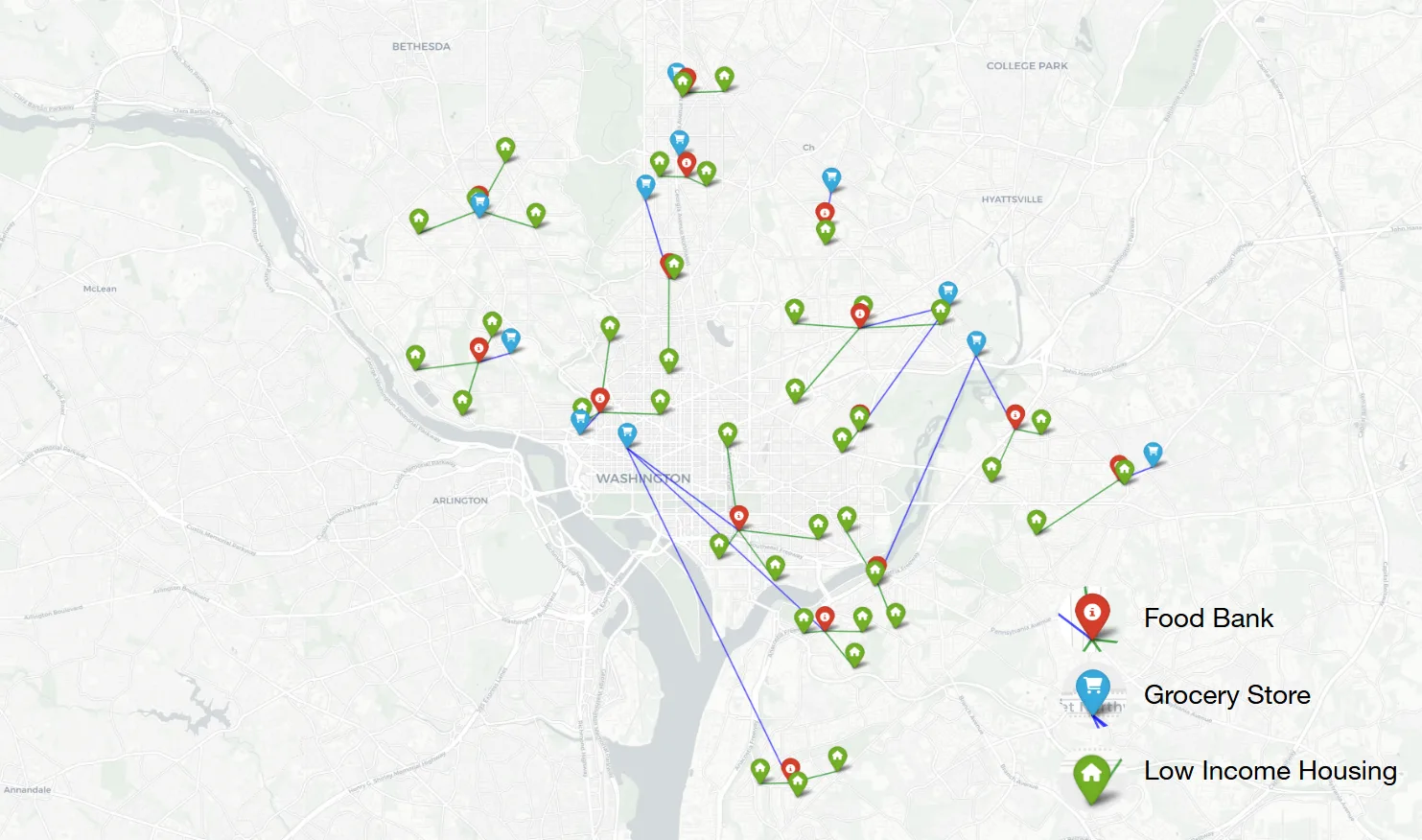
Food Bank Supply Chain
A Case Study of Washington, D.C.
1. Problem Statement
Food insecurity is a critical public health issue linked to malnutrition, chronic diseases, and reduced quality of life. It disproportionately affects homeless individuals, low-income families, children, and seniors.
In the Washington, D.C., area, thousands of residents face challenges in accessing affordable and nutritious food. Despite the efforts of emergency food providers and urban farms, significant gaps in food distribution and accessibility remain, particularly in low-income neighborhoods. A 2024 report from the Capital Area Food Bank revealed that 37% of households experienced food insecurity (Capital Area Food Bank, 2024).
To address this challenge, it is essential to establish an efficient food assistance supply chain that enables timely identification and accurate estimation of food insecurity while ensuring a smooth and robust logistics flow from supply to demand. Food banks, as central hubs of the food assistance distribution network, play a pivotal role in ensuring the effective delivery of resources. An efficient food bank network can effectively reduce food insecurity (Bazerghi, C., et al. 2016).
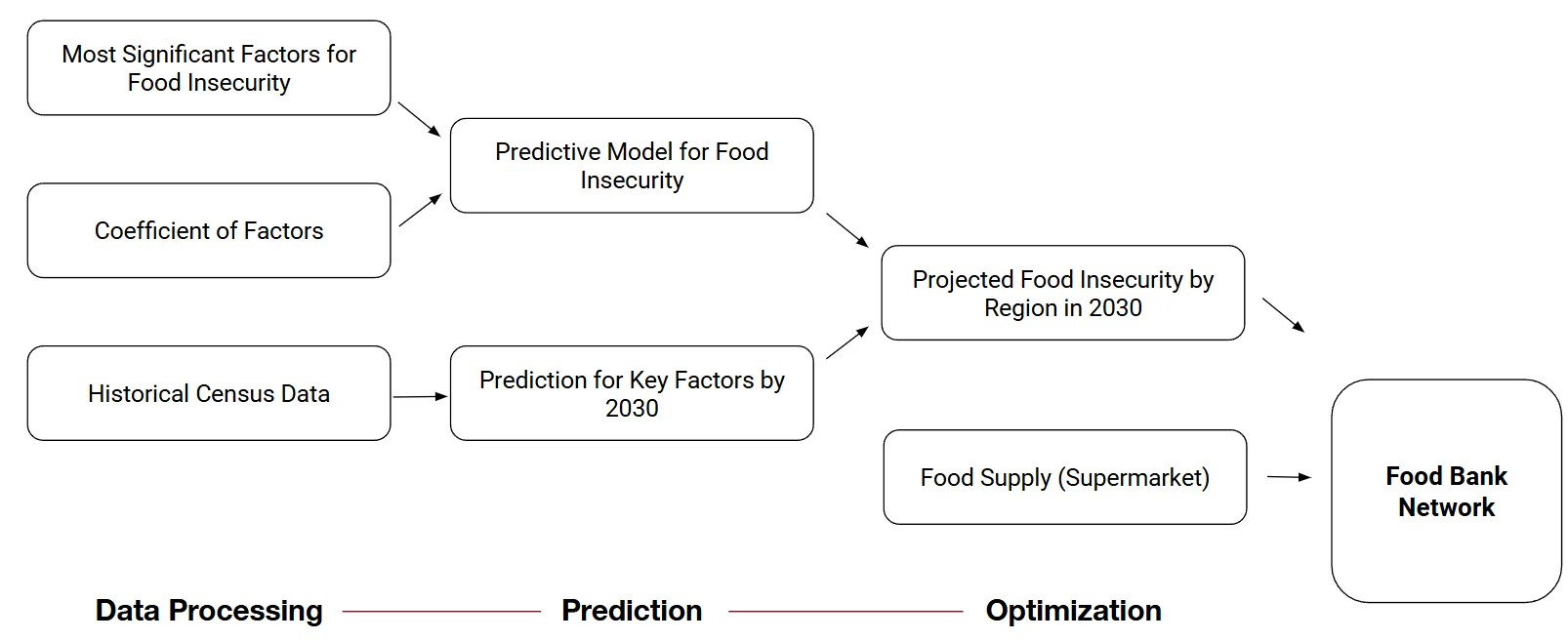
We built a forecasting + optimization pipeline that turns socioeconomic signals into food insecurity predictions, then uses them to place food banks and route supply efficiently.
The diagram summarizes how predictions and decisions connect end-to-end—from data inputs to optimized logistics outputs.

2. Methodology
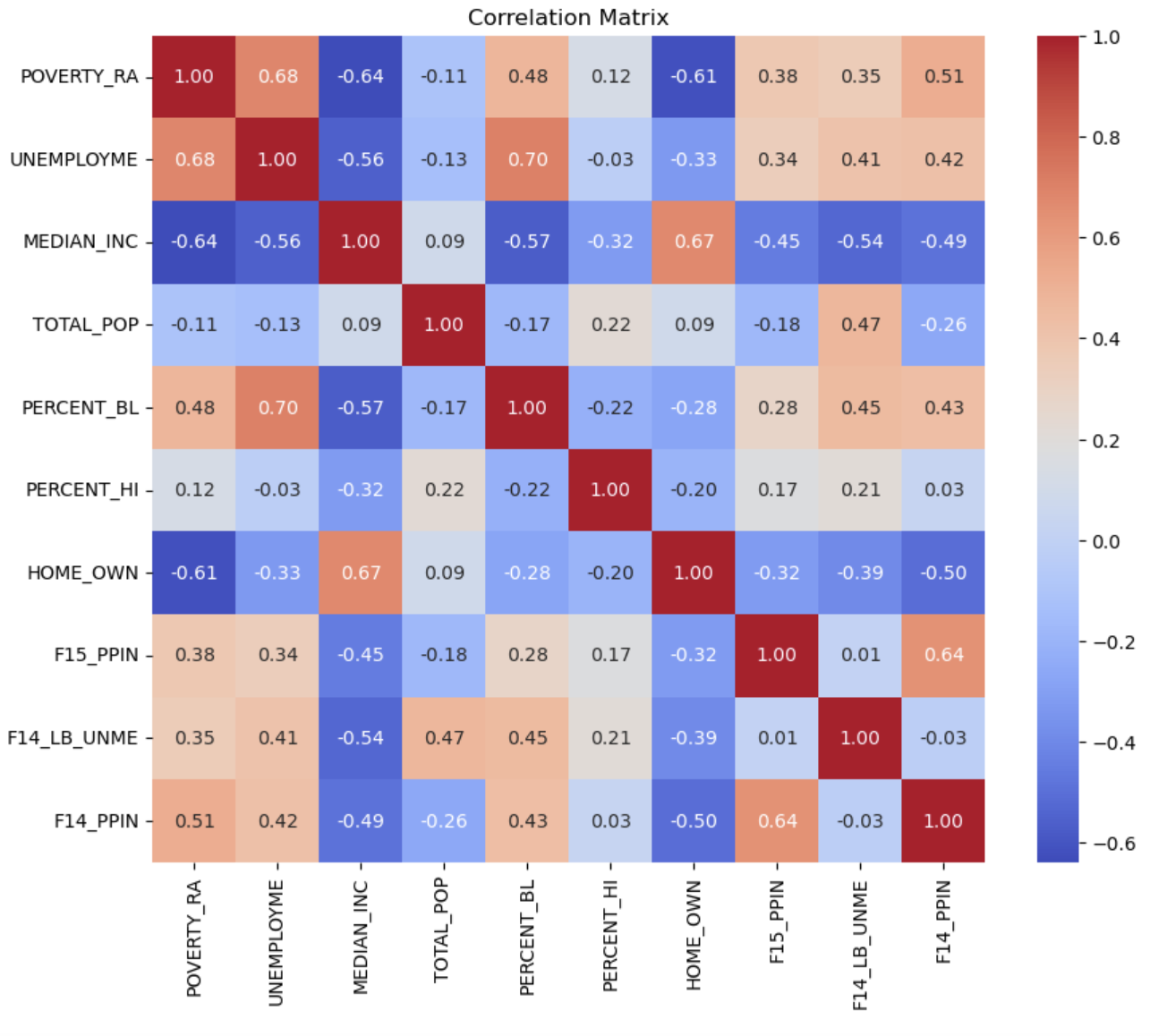
To optimize the food bank network by 2030, estimating the food insecurity rate for that year is crucial. We use Multivariable Linear Regression to pinpoint critical socioeconomic factors. We apply predictive models—such as Random Forest, Time Series, and Linear Regression—to forecast their values for 2030.
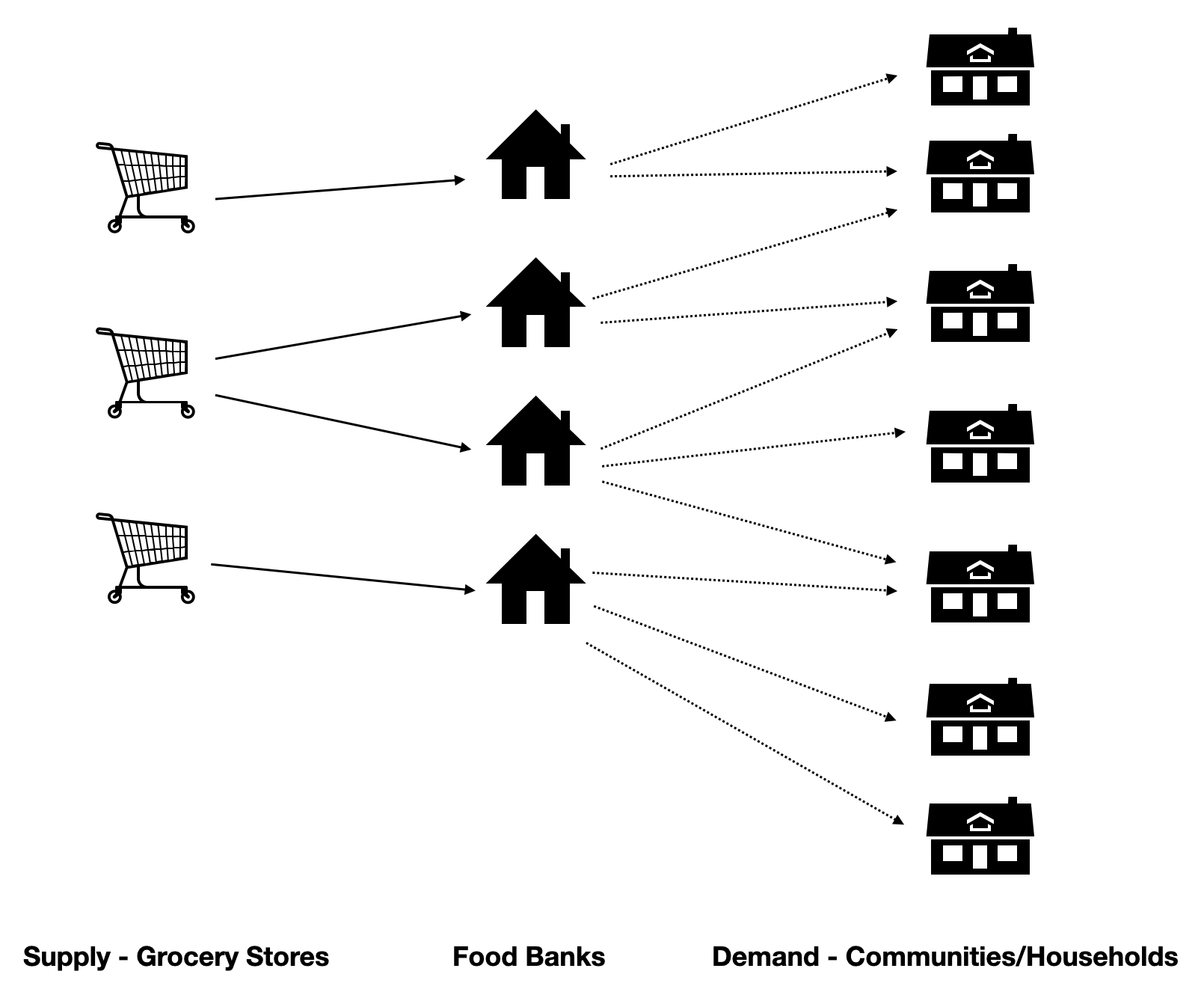
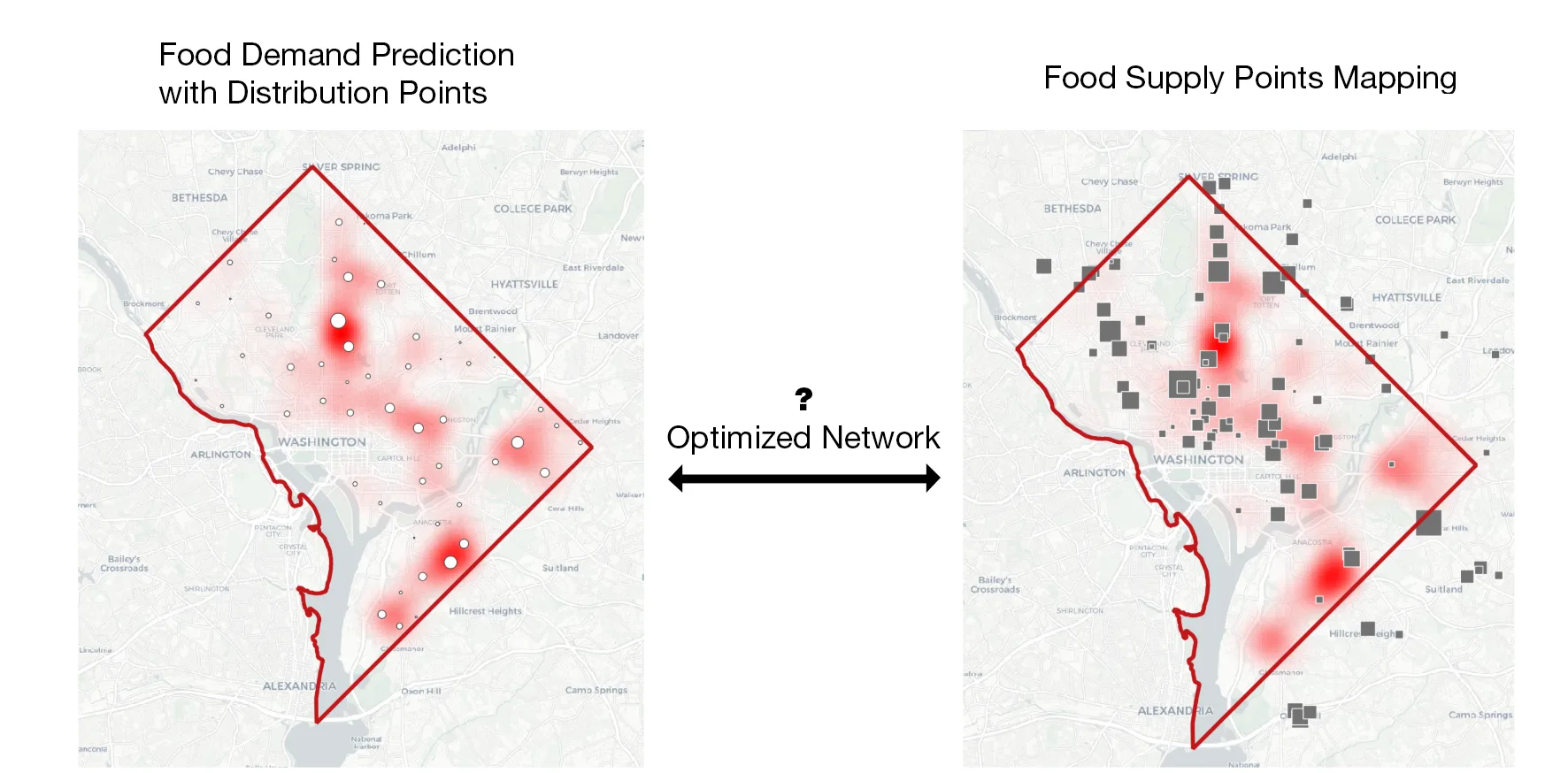
To design and optimize the food bank network, it is critical to understand both demand and supply.
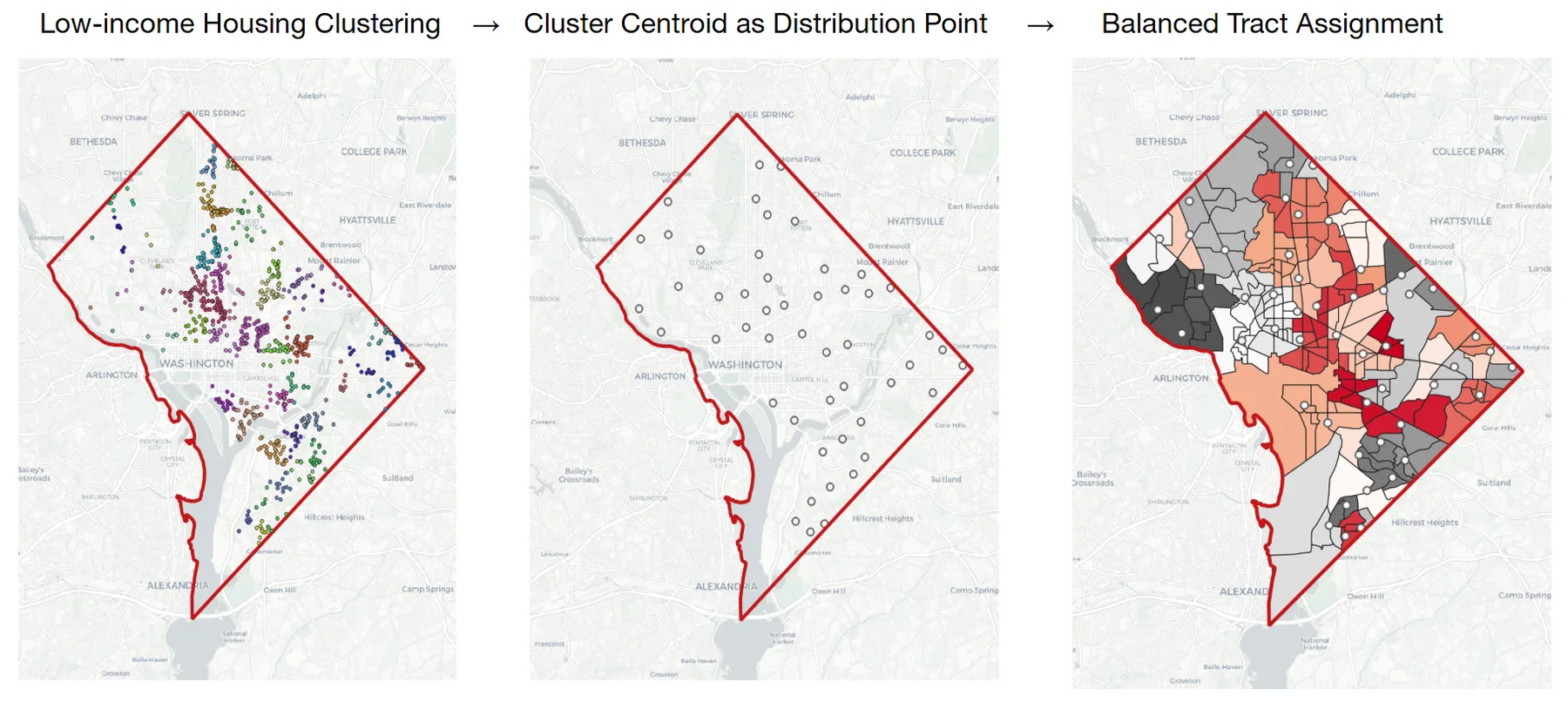
- Demand refers to the location and food insecurity rate of communities vulnerable to food insecurity.
- Supply refers to the location and capacity of grocery stores that serve as sources for food banks.
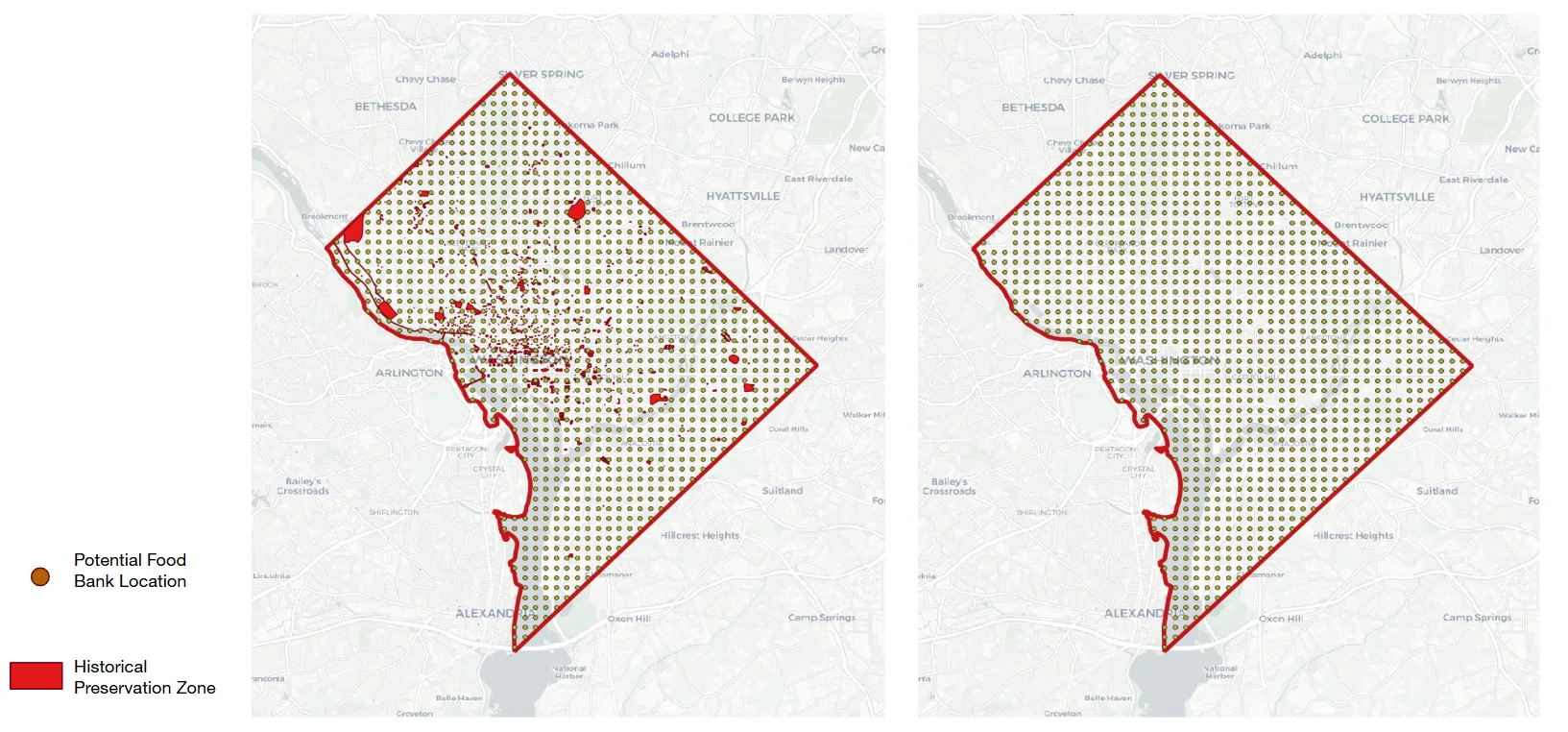
With both supply and demand data, we use Gurobi to solve a mixed-integer programming problem and determine the optimal locations for food banks.
3. Datasets
Conclusion
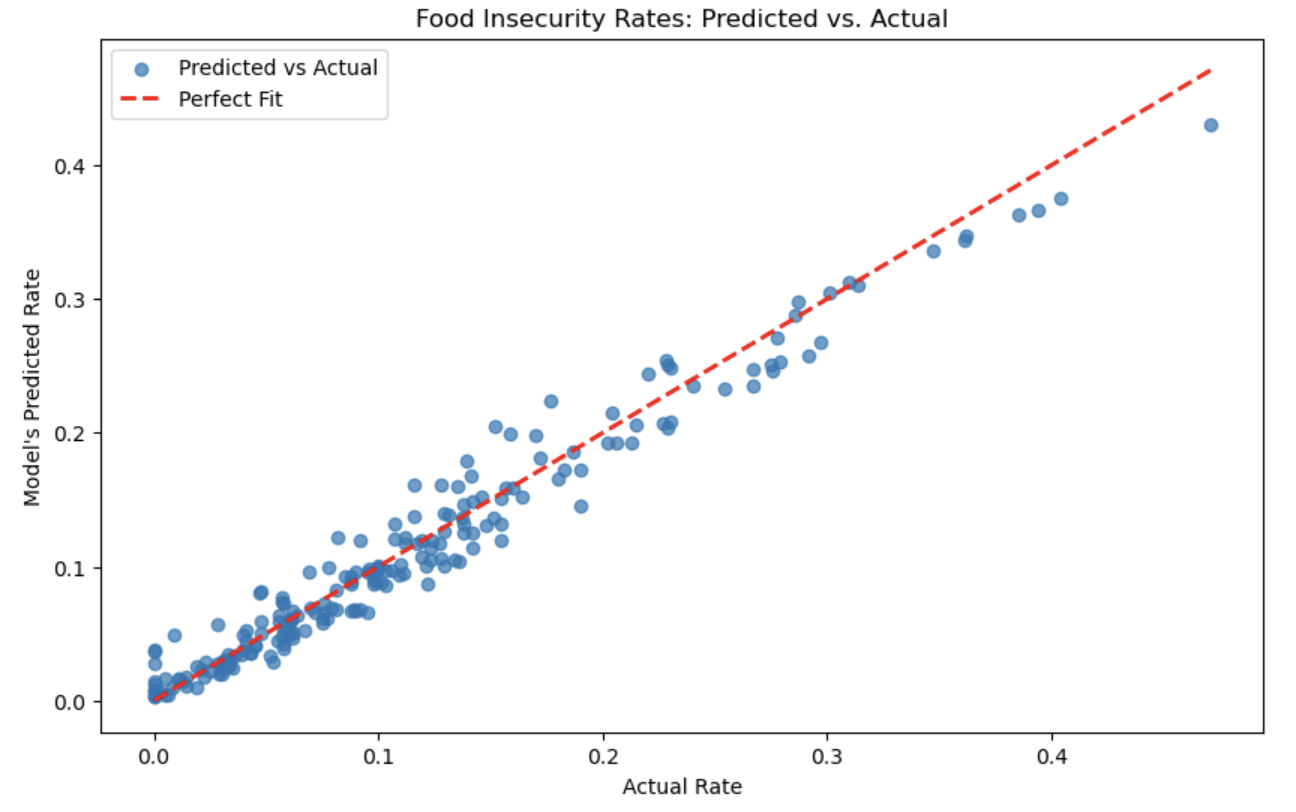
Our project introduces an optimization workflow designed to address food insecurity in the Washington, D.C., region by leveraging predictive modeling and network optimization. We use a multivariable linear regression model to predict food demand with high accuracy, achieving an R² value of 0.96287.